
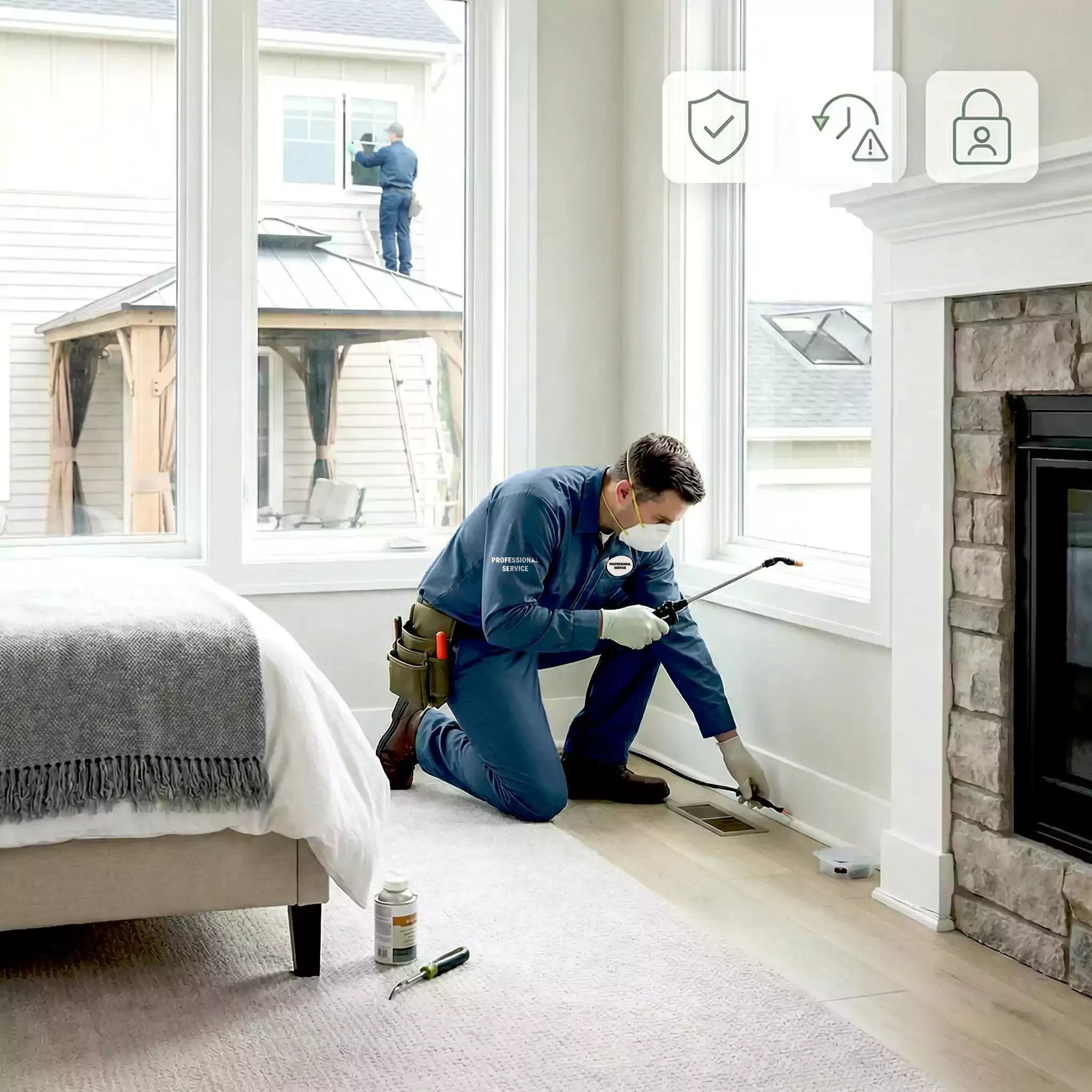
Understanding Pest Control as a System
Effective pest control isn't just spraying chemicals — it's a process of identification, exclusion, treatment, and monitoring. The most important variable is knowing exactly what you're dealing with before any treatment begins.
Identification comes first. The pest species determines everything — the treatment method, the products used, where they're applied, and whether a one-time treatment or ongoing program makes sense. A technician who treats without a thorough inspection and clear identification of species and harborage areas is skipping the most critical step. Different ants require completely different treatment approaches. Bed bugs require different protocols than cockroaches. Termite species determine whether liquid treatment or bait systems are more appropriate.
Integrated Pest Management (IPM) is the professional standard — a methodology that prioritizes prevention, exclusion, and targeted treatment over broad chemical application. IPM starts by eliminating conditions that attract and harbor pests: entry points, moisture sources, food access, and harborage areas. Chemical treatment is used strategically and minimally, targeting specific pests with appropriate products rather than blanket spraying.
Sealing entry points, eliminating moisture, storing food in airtight containers, keeping firewood away from the house, and trimming vegetation away from your foundation will prevent more pest problems than any chemical treatment. A good pest control company will point this out — a bad one won't, because exclusion work reduces your dependency on their services.
Pest problems fall into three categories by urgency: immediate health or structural threats (termites, bed bugs, rodents, stinging insects in the home), nuisance pests (ants, spiders, occasional invaders), and preventive concerns (ongoing perimeter treatment, seasonal applications). Each category warrants a different response — and a different type of service agreement.
Types of Pest Control Services
Pest control isn't one service — it's a spectrum of specialized treatments. A company that excels at termite work may not be the right choice for a bed bug infestation, and vice versa.
Perimeter and interior treatment for common household pests — ants, cockroaches, spiders, silverfish, earwigs, and occasional invaders. Typically offered as quarterly or monthly recurring programs.
Liquid soil treatments (termiticides) or bait station systems targeting subterranean termites. Drywood termite treatment includes fumigation or heat treatment. Requires professional identification of species first.
Chemical treatment, heat treatment (whole-room or whole-home), or cryogenic freezing. Bed bugs are among the most difficult pests to eliminate — multiple treatments are typically required regardless of method.
Trapping, bait stations, and exclusion work to seal entry points. Rodent control without exclusion is a treadmill — you'll keep catching mice until the entry points are sealed. Exclusion is the most important component.
Removal and treatment of wasp, hornet, yellow jacket, and bee nests. Honeybee removal ideally involves live removal and relocation by a beekeeper. Aggressive colonies inside walls require professional treatment.
Barrier sprays applied to vegetation and harborage areas, plus source reduction (standing water elimination). Typically seasonal programs. Effectiveness varies — realistic expectations matter here.
Trapping and removal of raccoons, squirrels, opossums, skunks, and other wildlife. Requires proper licensing. Must include exclusion to prevent re-entry — removal alone is never a permanent solution.
Sealing entry points, installing door sweeps, screening vents, and addressing structural vulnerabilities that allow pest entry. The most durable long-term pest control investment — often underoffered by companies focused on recurring treatment revenue.
What Pest Control Services Actually Cost
National average ranges below. Pricing varies significantly by pest type, home size, infestation severity, and region. Pest control is one of the few home services where the cheapest option is almost never the best value.
| Service | Typical Range | Key Cost Drivers |
|---|---|---|
| Initial inspection | Free–$150 | Many companies offer free inspections as a sales tool; independent inspections cost more but carry no sales pressure |
| One-time general pest treatment | $150–$400 | Home size, pest type, interior vs exterior only |
| Quarterly pest program (per visit) | $100–$200/visit | Contract length, number of pests covered, home size |
| Monthly pest program (per visit) | $40–$100/visit | Contract terms, service scope, urban vs rural |
| Termite inspection | $75–$200 | Often free from treatment companies; paid inspections for home sales |
| Termite liquid treatment | $1,000–$3,000+ | Linear footage of foundation, soil conditions, product used |
| Termite bait system (installed) | $1,200–$3,500 | Number of stations, annual monitoring fees, home size |
| Bed bug treatment (chemical) | $300–$900/room | Number of rooms, infestation severity, follow-up visits |
| Bed bug heat treatment (whole home) | $1,500–$4,000 | Home size, equipment required, access difficulty |
| Rodent control (trapping + exclusion) | $300–$1,500 | Entry points found, linear footage sealed, ongoing monitoring |
| Mosquito barrier spray (per treatment) | $75–$200 | Property size, vegetation density, frequency |
| Wildlife removal (per animal) | $150–$500 | Species, trapping difficulty, exclusion work included |
Many pest control companies lead with aggressive pricing on the initial treatment and make their margin on annual contracts with auto-renewal and early termination fees. Read the contract before signing — specifically the cancellation policy, what pests are covered, what triggers a free re-service, and whether the price can increase during the contract term.
When to Call a Professional — and When to DIY
For nuisance pests, DIY treatment is often effective and far cheaper. For structural pests, health-risk pests, or large infestations, professional treatment isn't optional — it's the only practical path to elimination.
DIY-appropriate: ant bait stations for small ant trails, snap traps for one or two mice, store-bought wasp spray for small exposed nests (at night, from a distance), sticky traps for monitoring, diatomaceous earth for crawling insects in dry areas, and caulking small entry points.
Any sign of termites — mud tubes, damaged wood, swarmers · Bed bugs (DIY treatment almost always fails and spreads the infestation) · Rodents inside walls or ceilings · Wasp or hornet nests inside the home's structure · Any stinging insect nest larger than a fist or in an inaccessible location · Wildlife inside your attic, crawlspace, or walls
A critical rule for bed bugs: Do not move furniture, bag clothing, or sleep in a different room when you suspect bed bugs — this spreads them to new areas before treatment begins. Call a professional first, get a treatment plan, and follow their preparation instructions exactly. Pre-treatment preparation done incorrectly is one of the most common reasons bed bug treatments fail.
Understanding Pest Control Contracts
Pest control is one of the most contract-heavy home services. Understanding what you're agreeing to before you sign protects you from unexpected costs and locks you into services you may not need.
Annual vs. month-to-month: Annual contracts typically offer lower per-visit pricing but come with early termination fees — often $150–$300 or the equivalent of two months' service. Month-to-month costs more per visit but gives you flexibility. If you're trying a new company, month-to-month for the first year is a lower-risk starting point.
Pest coverage: Most contracts cover general pests but exclude termites, bed bugs, wildlife, and specialty pests — these require separate agreements. · Re-service policy: If pests return between scheduled visits, is a free re-service guaranteed? Under what conditions? · Auto-renewal: Does the contract automatically renew? What's the cancellation notice period? · Price escalation: Can the company raise prices mid-contract or at renewal?
Termite bonds are a specific type of contract worth understanding. A termite bond (or termite warranty) is an ongoing monitoring and treatment agreement — typically $200–$500/year after the initial treatment. Some bonds cover only re-treatment if termites return; others cover repair of any new termite damage. The latter (a "repair and retreat" bond) is significantly more valuable and worth the premium for high-risk properties or older homes.
How to Hire the Right Pest Control Company
Licensing requirements, chemical handling regulations, and the complexity of pest biology mean that who you hire matters more than it might appear from the outside.
Every state requires pest control technicians to be licensed by the state department of agriculture or a similar regulatory body. Ask for the company's pesticide applicator license number and verify it. Unlicensed applicators have no regulatory accountability and may use products incorrectly or illegally.
A legitimate pest control company will conduct a thorough inspection before recommending any treatment. They should identify the specific pest species, locate harborage areas and entry points, assess the severity of the infestation, and explain why they're recommending a specific treatment approach. No inspection = no legitimate diagnosis.
You have a legal right to know what pesticides are being applied in your home. Ask for the product names and Safety Data Sheets (SDS) before treatment. A reputable company will provide these without hesitation. This is especially important if you have children, pets, or household members with chemical sensitivities.
For termite treatment, bed bug treatment, or any job over $500, get at least two quotes. Treatment approaches vary significantly — one company may recommend liquid termiticide while another recommends bait stations. Understanding the reasoning behind different approaches helps you make an informed decision, not just a price-based one.
What does the company guarantee, specifically? "Satisfaction guaranteed" is meaningless. "Free re-treatment within 30 days if pests return" is something. "Termite damage repair covered under ongoing bond" is meaningful. Get guarantees in writing, understand their conditions, and confirm the company has been in business long enough to honor long-term commitments.
Red Flags to Watch For
Pest control has a persistent problem with high-pressure sales, unnecessary upsells, and treatments that don't match the actual pest problem. These patterns are common enough to know in advance.
- Recommends treatment before completing a thorough inspection and identifying the specific pest species
- Cannot provide their state pesticide applicator license number when asked
- Refuses to disclose what products they're using or provide Safety Data Sheets
- Uses scare tactics — exaggerating infestation severity to justify expensive treatments
- Pressures you to sign a contract during the initial visit with "today only" pricing
- Recommends full fumigation for a pest problem that doesn't warrant it
- Door-to-door sales pitch with no prior contact or referral (common with summer pest control crews)
- Contract has no re-service guarantee or unclear cancellation terms
Every summer, crews of door-to-door pest control salespeople spread across residential neighborhoods offering deeply discounted initial treatments to sign annual contracts. The initial treatment is often rushed or superficial — the business model is the contract, not the treatment. Before signing with any door-to-door solicitor, check their license, look up the parent company's reviews independently, and read the full contract before any technician visits.