
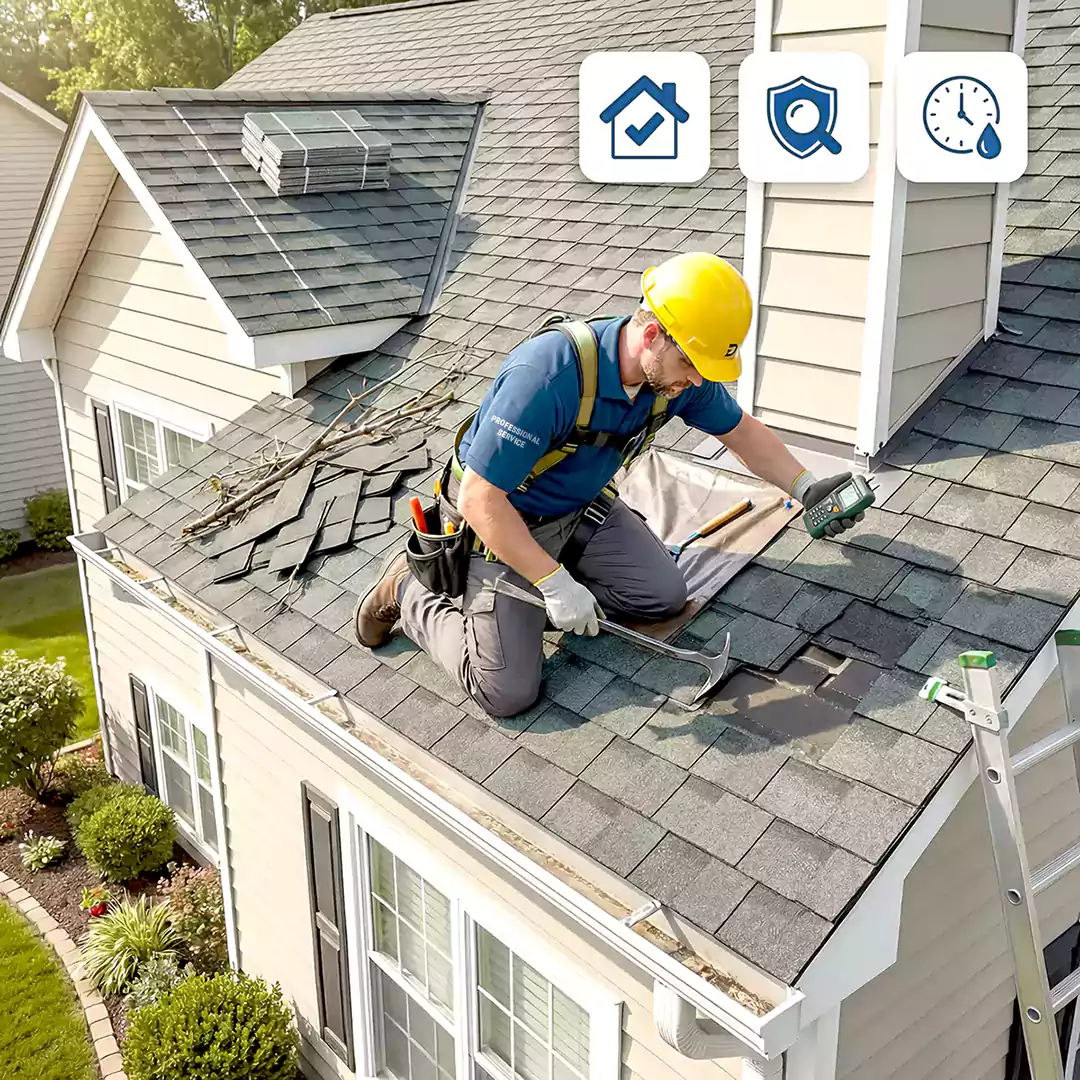
Understanding Your Roof as a System
A roof isn't just shingles — it's a layered system of materials working together to shed water, resist wind, manage heat, and protect your home's structure. When one layer fails, the others are rarely far behind.
Starting from the top: shingles or roofing material are the visible outer layer — the first line of defense against weather. Below that sits the underlayment, a water-resistant barrier (typically synthetic or felt) that protects the roof deck if shingles are damaged or lifted. Beneath that is the roof deck — the structural plywood or OSB sheathing that everything else attaches to. If the deck is rotted or damaged, no amount of new shingles will fix the problem.
Flashing is the thin metal material installed at every roof penetration and junction — around chimneys, vents, skylights, dormers, and valleys where two roof planes meet. Flashing failures are responsible for a large percentage of roof leaks. Water finds its way in at transitions, not through intact shingles. Inspecting and maintaining flashing is as important as the shingles themselves.
Many roof leaks are first visible in the attic — water stains on rafters, wet insulation, or daylight showing through. A quick attic inspection after every major storm is the easiest early warning system you have. Don't wait until you see a ceiling stain, which means water has already traveled through insulation and drywall.
The ventilation system — ridge vents, soffit vents, and attic fans — is often overlooked but critical. Proper airflow prevents heat and moisture buildup in the attic that can warp decking, rot rafters, and dramatically shorten shingle lifespan. An improperly ventilated attic can cut a 30-year shingle's lifespan in half and void manufacturer warranties.
Types of Roofing Services
Roofing work ranges from patching a single shingle to a complete tear-off and replacement. Knowing the service category helps you evaluate whether a contractor's recommendation is appropriate for your situation.
Fixing localized damage — replacing missing or cracked shingles, resealing lifted tabs, patching small areas after storm damage. Effective when damage is isolated and the roof is otherwise sound.
Complete tear-off of existing roofing material and installation of new shingles, underlayment, and flashing. Required when the roof is at end of life or damage is widespread.
Identifying the source of active leaks and sealing them. Leak sources are often not directly above the ceiling stain — water travels along rafters before dripping. Proper diagnosis requires a trained eye.
Resealing or replacing flashing around chimneys, skylights, vents, and valleys. Responsible for the majority of roof leaks — often repairable without full shingle replacement.
Installing or improving ridge vents, soffit vents, and attic fans. Proper ventilation extends shingle life, reduces energy costs, and prevents ice dams in cold climates.
Cleaning, repairing, or replacing gutters and downspouts. A direct extension of the roofing system — clogged or damaged gutters cause water to back up under shingles and rot fascia boards.
Removing ice dams that form at eaves in cold climates, and addressing the root cause — heat escaping through the attic floor melting snow unevenly. Both a ventilation and insulation issue.
Professional inspection for home purchase, insurance claims, or routine assessment. Should include attic inspection, flashing check, and photo documentation. Some insurers require periodic inspections.
What Roofing Services Actually Cost
Roofing is priced by the "square" — one roofing square equals 100 square feet of roof surface. A 2,000 sq ft house typically has 20–25 squares of roof due to pitch and overhangs. Use these ranges as a baseline for evaluating quotes.
| Service | Typical Range | Key Cost Drivers |
|---|---|---|
| Roof inspection | $150–$400 | Roof size, pitch, number of penetrations |
| Minor repair (1–3 shingles) | $150–$400 | Accessibility, shingle match, flashing involvement |
| Moderate repair (small section) | $400–$1,500 | Square footage, deck damage, underlayment replacement |
| Flashing repair / resealing | $200–$600 | Number of penetrations, chimney vs vent vs valley |
| Gutter cleaning (avg home) | $100–$250 | Linear footage, stories, debris volume |
| Gutter replacement (per linear ft) | $6–$20/ft | Aluminum vs copper, K-style vs half-round, stories |
| 3-tab shingle replacement (per sq) | $350–$500/sq | Tear-off layers, deck condition, local labor |
| Architectural shingle replacement (per sq) | $450–$700/sq | Shingle grade, warranty class, pitch |
| Full replacement — avg 2,000 sq ft home | $8,000–$18,000 | Squares, pitch, layers to tear off, deck repairs |
| Metal roofing (standing seam, per sq) | $900–$1,600/sq | Metal gauge, profile, installation complexity |
| Skylights (installed) | $900–$2,500 | Fixed vs venting, brand, flashing kit |
| Ridge vent installation | $300–$650 | Ridge length, existing ventilation condition |
If you file a claim and the damage is below your deductible, you've still created a claims record that can raise your premiums. For minor damage, get at least one contractor assessment before deciding whether to claim. For major storm damage, document everything first, then claim — but understand that filing multiple claims in short periods can affect insurability.
When to Call a Roofer — and When to Wait
Roofing is one of the most dangerous DIY categories. Falls from roofs are a leading cause of serious injury and death among homeowners attempting their own repairs. The risk-to-reward ratio is rarely favorable.
Safe from the ground or attic: inspecting your attic for moisture or daylight, cleaning gutters from a ladder (ground-level work), applying roof sealant to accessible low-slope areas, and photographing roof damage with binoculars or a drone for insurance documentation.
Active leak during or after a storm · Ceiling stains that are spreading or wet to the touch · Visible sagging in the roof deck or ceiling · Missing shingles after high winds · Hail damage (dimpling on shingles, gutters, or AC unit fins) · Any situation where you'd need to get on the roof yourself — don't.
Schedule a non-emergency inspection for: shingles older than 20 years, granule buildup in gutters (sign of shingle wear), moss or algae growth, curling or cupping shingle edges, and before listing your home for sale. Most roofing issues are far cheaper to address early than after water has penetrated the deck.
Navigating Insurance Claims for Roof Damage
Roof insurance claims are one of the most complex homeowner interactions with insurance companies. Understanding the process protects you from both underpayment by insurers and fraud by contractors.
Most homeowner policies cover sudden and accidental damage — hail, wind, falling trees. They do not cover wear and tear, age-related deterioration, or lack of maintenance. If your 25-year-old roof leaks because shingles have reached end of life, that's a maintenance issue, not a covered loss. Insurers will often inspect and deny claims on older roofs for this reason.
Before any contractor touches your roof: photograph all damage from the ground, document the date of the storm or event, and get an independent inspection. Do not let a contractor pressure you to start work before your insurance adjuster has inspected — you may forfeit your right to claim if the damage is altered.
When an adjuster visits, you have the right to have your contractor present. If the adjuster's estimate seems low, you can request a re-inspection or hire a public adjuster — an independent professional who negotiates claims on your behalf for a percentage of the settlement (typically 10–15%). For large claims, this can be well worth it.
Actual Cash Value (ACV) vs. Replacement Cost Value (RCV): ACV policies pay out the depreciated value of your roof — a 15-year-old roof may only be worth 40% of replacement cost under ACV. RCV policies pay full replacement cost after you complete the work and submit receipts. Know which policy you have before filing.
How to Hire the Right Roofer
Roofing attracts more fraud and fly-by-night contractors than almost any other home service — especially after storms. Verification and documentation are non-negotiable.
Requirements vary by state — some require a roofing-specific license, others a general contractor license, some nothing at all. Check your state's contractor licensing board. At minimum, confirm the company has a verifiable local business address and has been operating for at least 3–5 years.
General liability (minimum $1M) and workers' compensation are both essential. Roofing has one of the highest injury rates of any construction trade. An uninsured worker injured on your property can result in a lawsuit against you. Request the certificate directly from the insurance company, not just a contractor-provided copy.
Major shingle manufacturers (GAF, CertainTeed, Owens Corning) certify installers who meet their training standards. Certified installers can offer extended manufacturer warranties (up to 50 years on materials + labor) that aren't available through uncertified contractors. Ask specifically which warranty tier they can offer.
A complete roofing quote should specify: shingle brand, line, and warranty class; number of layers to tear off; underlayment type; ice and water shield areas; flashing replacement vs. reuse; ventilation changes; cleanup and haul-away; and permit costs. Any quote missing these details is not comparable to one that includes them.
Ask for references from jobs completed in your area within the past 12 months — not just names, but addresses you can drive by. A contractor with a local office, local crew (not subcontracted), and verifiable recent local work is dramatically lower risk than a traveling crew operating out of a truck after a storm.
Red Flags to Watch For
Storm chasers — contractors who follow hailstorms and high-wind events door to door — are a documented and pervasive problem. Their tactics are predictable once you know them.
- Shows up unsolicited after a storm offering a "free inspection" and pressures you to sign immediately
- Offers to waive your insurance deductible — this is insurance fraud in most states
- Asks you to sign an Assignment of Benefits (AOB) form, giving them control of your insurance claim
- Cannot provide a local physical business address or has out-of-state plates
- Requests large cash payment upfront before materials are ordered or work begins
- Cannot provide manufacturer certification when claiming certified-installer warranty pricing
- Proposes to "work with your insurance" but discourages you from reading what you're signing
- Uses high-pressure tactics — "this price is only good today" or "we have a crew available right now"
An AOB form transfers your insurance claim rights to the contractor. This means they — not you — control negotiations with your insurer. It's been used to inflate claims, create disputes, and leave homeowners liable for amounts above their coverage. If a contractor requires an AOB to start work, find a different contractor.